线程池构造方法不能控制任务的超时时间,
java.util.concurrent.ThreadPoolExecutor#ThreadPoolExecutor(int, int, long, java.util.concurrent.TimeUnit, java.util.concurrent.BlockingQueue<java.lang.Runnable>)
long, java.util.concurrent.TimeUnit设置的是超过core数量的线程在没有任务时最大的idleTime
但是执行任务时可以使用Future类来控制超时时间
AbstractExecutorService中invokeAll,invokeAny可以指定超时时间 (没有完成的task会被cancel,并抛出interrupted异常), 但其本质还是使用Future
http://westyi.iteye.com/blog/714935
Executors 返回的线程池对象的弊端如下:
1)FixedThreadPool 和 SingleThreadPool: 允许的请求队列长度为 Integer.MAX_VALUE,可能会堆积大量的请求,从而导致 OOM。
2)CachedThreadPool 和 ScheduledThreadPool: 允许的创建线程数量为 Integer.MAX_VALUE,可能会创建大量的线程,从而导致 OOM。
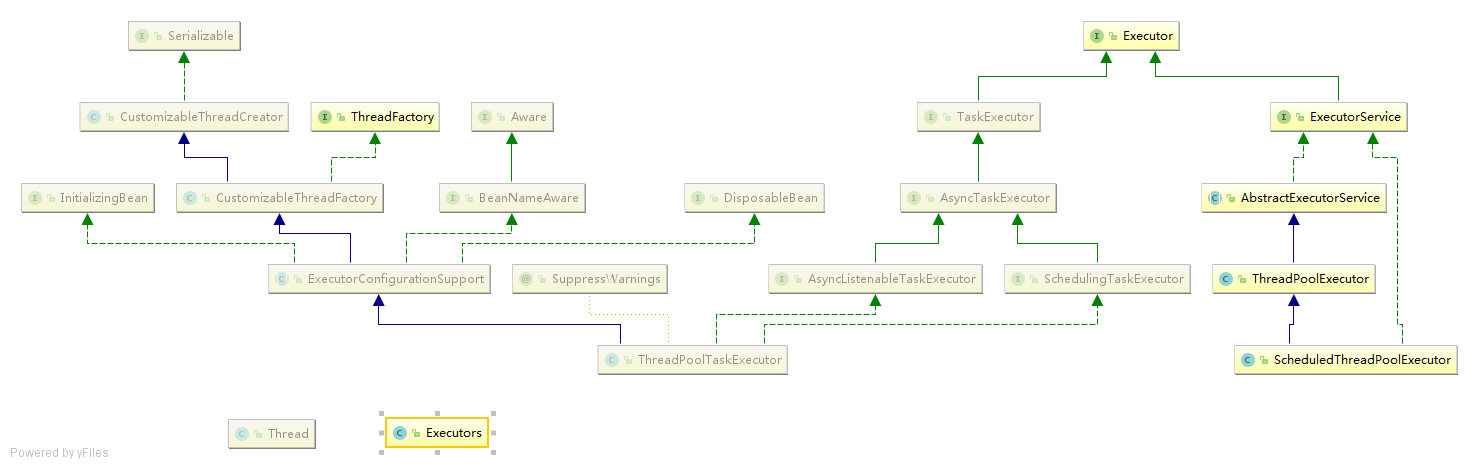
线程Thread
线程工厂 ThreadFactory
线程池 正确的概念是指ThreadPoolExecutor, 注意父类AbstractExecutorService, ExecutorService中超时方法的使用
转载于:https://www.cnblogs.com/yszzu/p/9510498.html
最后
以上就是炙热树叶最近收集整理的关于线程池中如何控制超时时间?的全部内容,更多相关线程池中如何控制超时时间内容请搜索靠谱客的其他文章。








发表评论 取消回复