好的设计思路,扎实的设计基础是Verilog设计电路的重点。
之前我们学习了Verilog计数器设计
计数器学习链接:http://blog.csdn.net/fengyuwuzu0519/article/details/72568727
这一节来看状态机设计。
一、状态机设计要点
1、概述
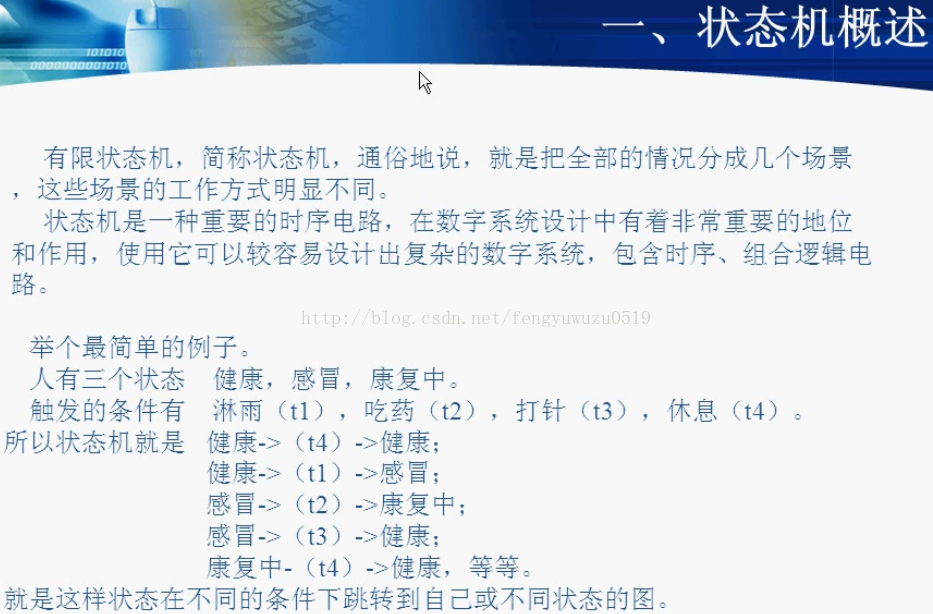
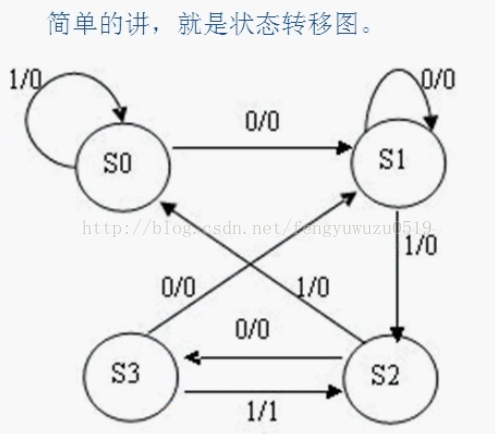
(2)状态机的转移图
(3)结构:

(4)设计标准

(5)状态机三段设计方法

第一:

第二:
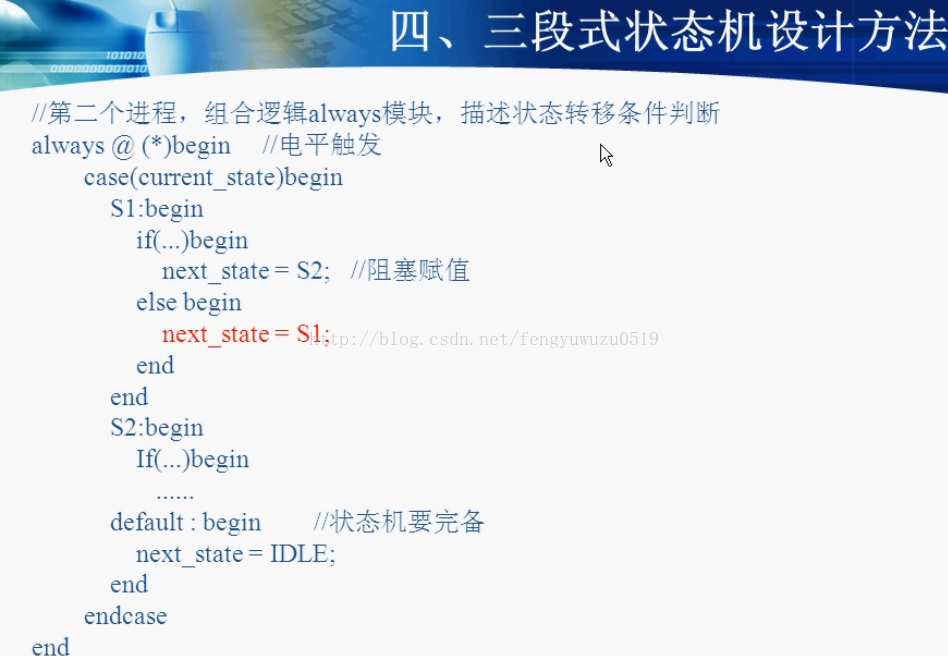
第三:

(6)三段状态机设计注意点

二、Verilog实现状态机练习题
(1)简单的状态切换
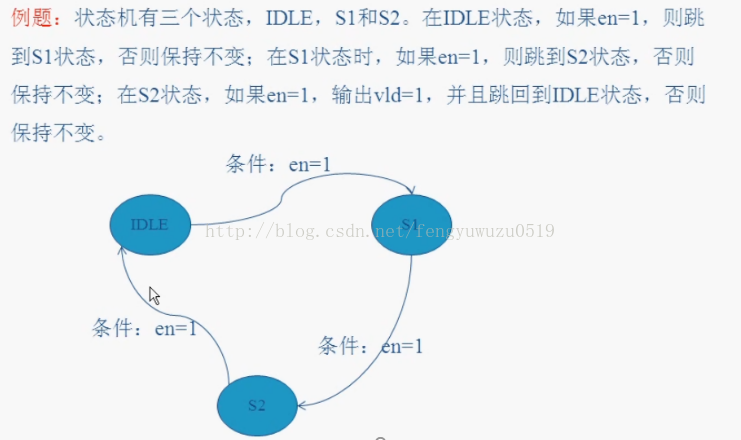
实现思路:三段
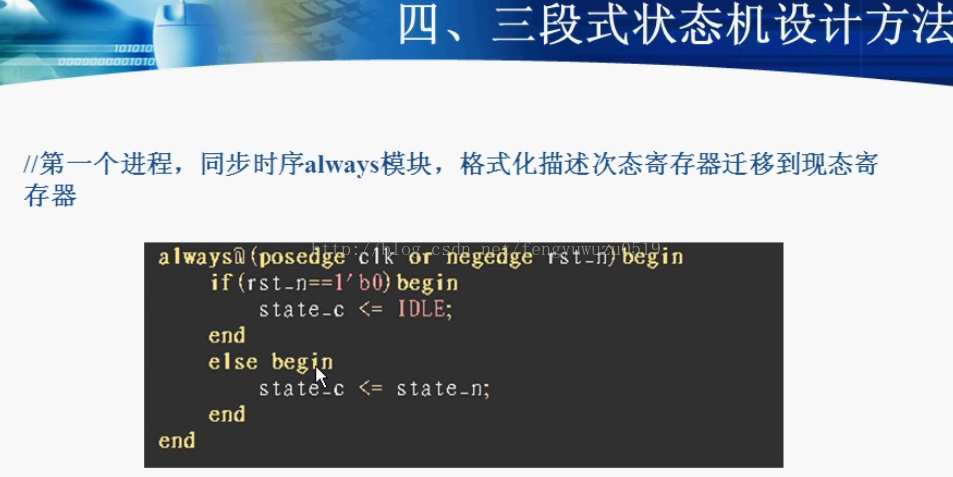
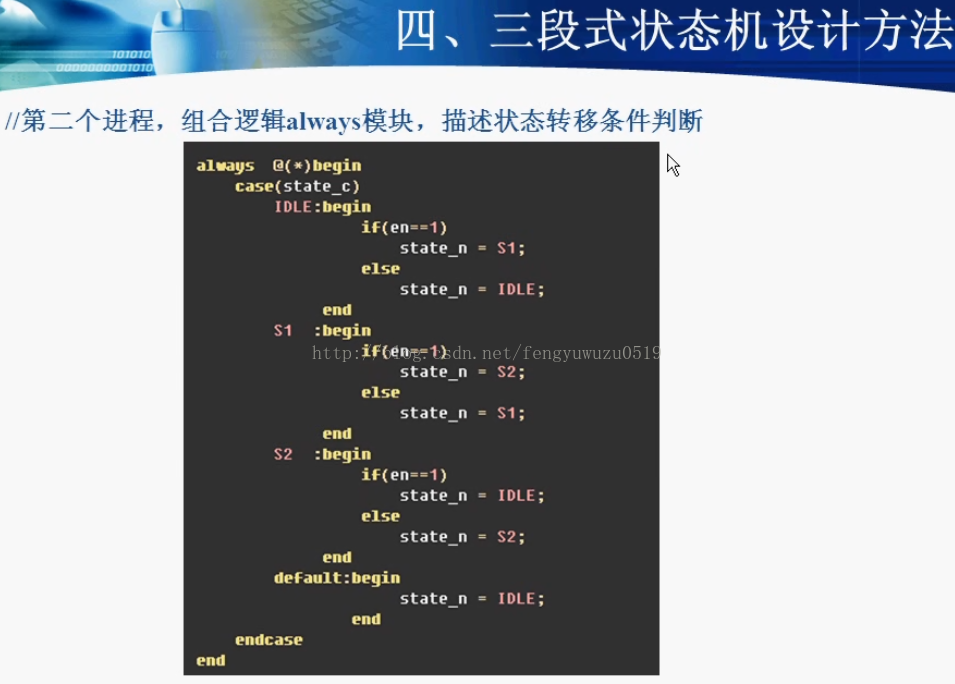
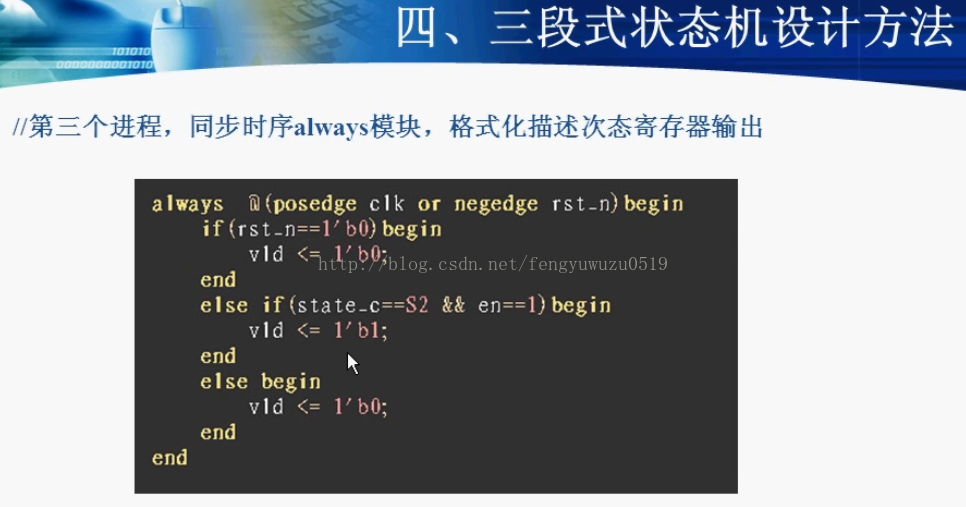

代码
module  exercise37(clk,rst_n,en,state_c);

parameter   STATE_WID   =   2;
parameter   IDLE        =   2'b00;
parameter   S1          =   2'b01;
parameter   S2          =   2'b10;

input                       clk;
input                       rst_n;
input                       en;
output  [STATE_WID-1:0]     state_c;

reg     [STATE_WID-1:0]     state_c;

reg     [STATE_WID-1:0]     state_n;


always  @(posedge clk or negedge rst_n)begin
    if(rst_n==1'b0)begin
        state_c<=IDLE;
    end
    else begin
        state_c<=state_n;
    end
end

always  @(*)begin
    case(state_c)
        IDLE:begin
            if(en==1'b1)begin
                state_n=S1;
            end
            else begin
                state_n=IDLE;
            end
        end
        S1:begin
            if(en==1'b1)begin
                state_n=S2;
            end
            else begin
                state_n=S1;
            end
        end
        S2:begin
            if(en==1'b1)begin
                state_n=IDLE;
            end
            else begin
                state_n=S2;
            end
        end
        default:begin
            state_n=state_c;
        end
    endcase
end
endmodule
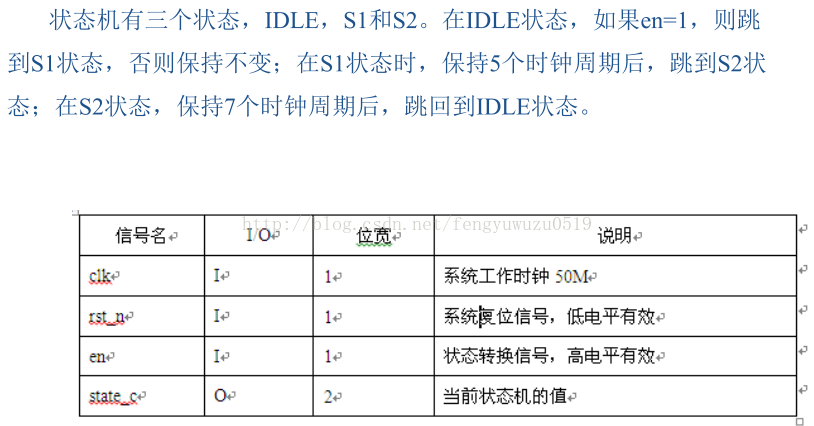
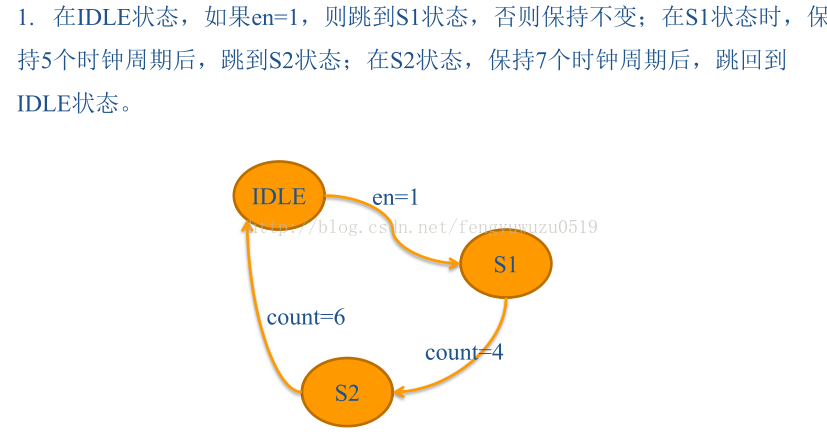
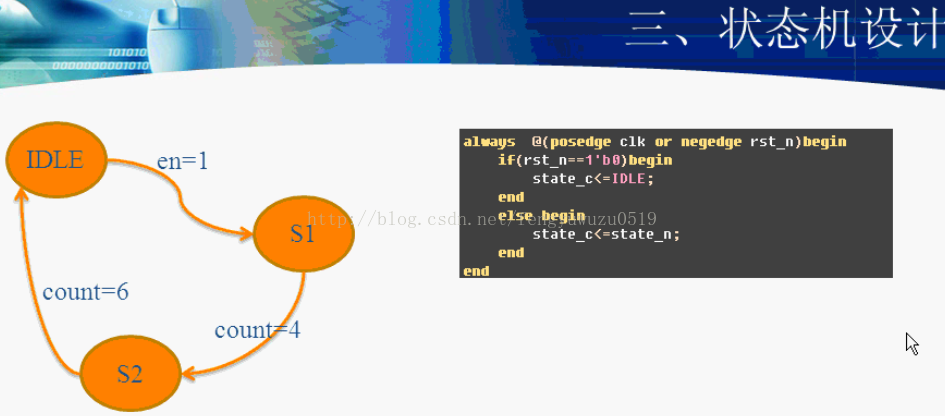
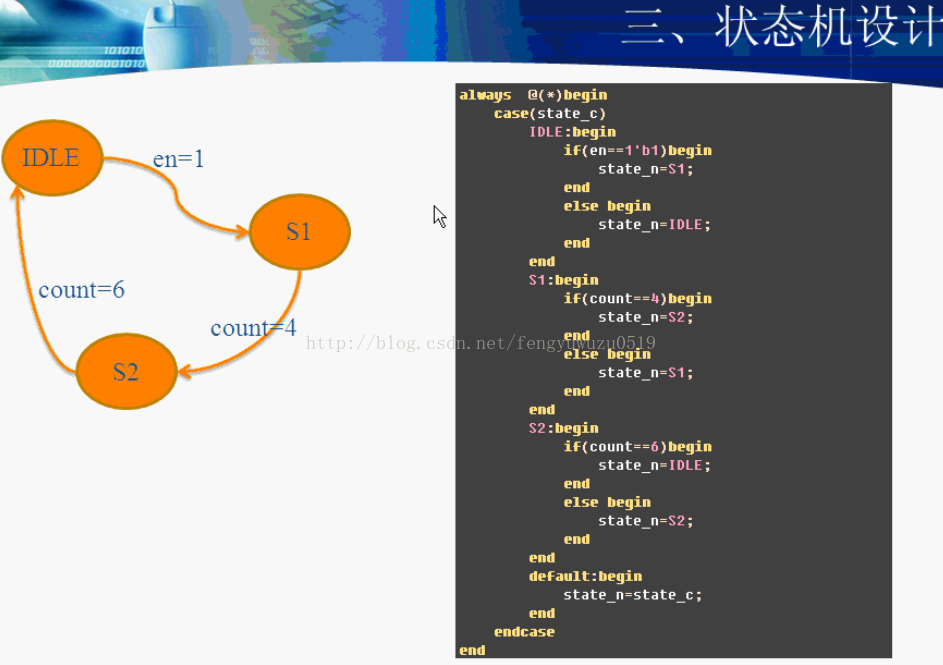
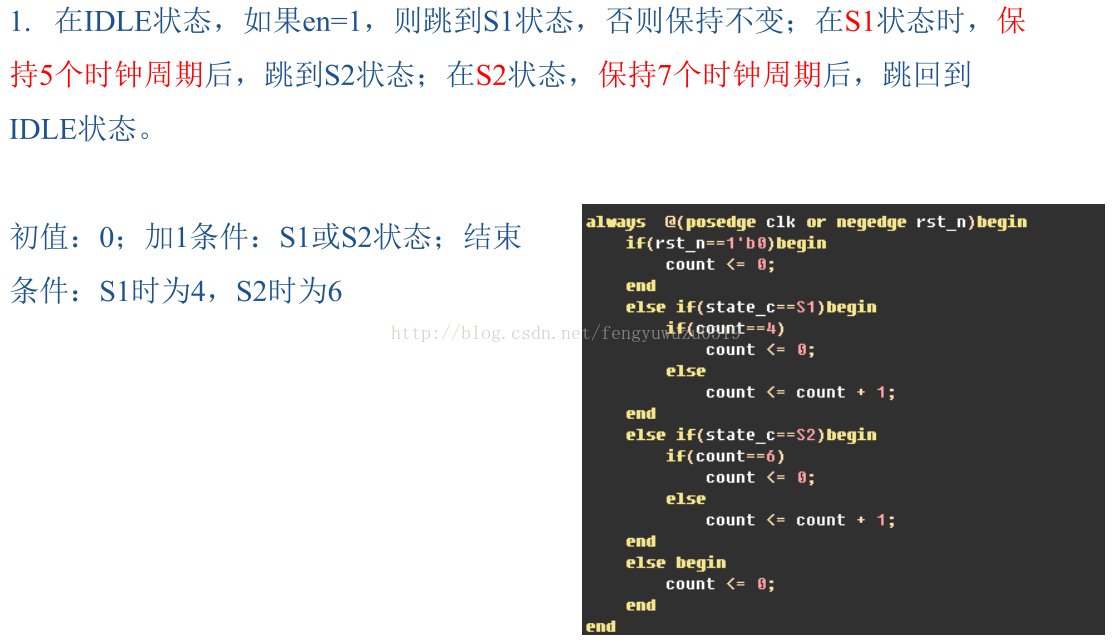

代码实现:
module  state2(clk,rst_n,en,state_c);

parameter   STATE_WID   =   2;
parameter   IDLE        =   2'b00;
parameter   S1          =   2'b01;
parameter   S2          =   2'b10;

input                       clk;
input                       rst_n;
input                       en;
output  [STATE_WID-1:0]     state_c;

reg     [STATE_WID-1:0]     state_c;

reg     [STATE_WID-1:0]     state_n;

always  @(posedge clk or negedge rst_n)begin
    if(rst_n==1'b0)begin
        state_c<=IDLE;
    end
    else begin
        state_c<=state_n;
    end
end

always  @(*)begin
    case(state_c)
        IDLE:begin
            if(en==1'b1)begin
                state_n=S1;
            end
            else begin
                state_n=IDLE;
            end
        end
        S1:begin
            if(count==4)begin
                state_n=S2;
            end
            else begin
                state_n=S1;
            end
        end
        S2:begin
            if(count==6)begin
                state_n=IDLE;
            end
            else begin
                state_n=S2;
            end
        end
        default:begin
            state_n=state_c;
        end
    endcase
end

always  @(posedge clk or negedge rst_n)begin
    if(rst_n==1'b0)begin
        count <= 0;
    end
    else if(state_c==S1)begin
        if(count==4)
            count <= 0;
        else
            count <= count + 1;
    end
    else if(state_c==S2)begin
        if(count==6)
            count <= 0;
        else
            count <= count + 1;
    end
    else begin
        count <= 0;
    end
end

endmodule
(3)状态机实现流水灯
module led(clk,rst_n,led);

input clk ;
input rst_n ;

output reg [3:0]led ;

reg     [1:0]     state_c;
reg     [1:0]     state_n;

parameter   IDLE        =   2'b00;
parameter   S1          =   2'b01;
parameter   S2          =   2'b10;

reg [31:0] count;


always  @(posedge clk or negedge rst_n)begin
    if(rst_n==1'b0)begin
        state_c<=IDLE;
    end
    else begin
        state_c<=state_n;
    end
end

always  @(*)begin
    case(state_c)
        IDLE:begin
            if(count==49999999)begin
                state_n=S1;
            end
            else begin
                state_n=IDLE;
            end
        end
        S1:begin
            if(count==49999999)begin
                state_n=S2;
            end
            else begin
                state_n=S1;
            end
        end
        S2:begin
            if(count==49999999)begin
                state_n=IDLE;
            end
            else begin
                state_n=S2;
            end
        end
        default:begin
            state_n=state_c;
        end
    endcase
end

always  @(posedge clk or negedge rst_n)begin
    if(rst_n==1'b0)begin
        led <= 4'b1111;
    end
    else if(state_c==S1)begin
        led=4'b0011;
    end
    else if(state_c==S2)begin
        led=4'b1100;
    end
    else begin
        led <= 4'b1111;
    end
end


always  @(posedge clk or negedge rst_n)begin
    if(rst_n==1'b0)begin
        count <= 0;
    end
    else begin
        if(count==49999999)
            count <= 0;
        else
            count <= count + 1;
    end
end

endmodule
最后
以上就是平常麦片最近收集整理的关于FPGA学习(第7节)-Verilog状态机(状态按条件切换) 一、状态机设计要点 二、Verilog实现状态机练习题的全部内容,更多相关FPGA学习(第7节)-Verilog状态机(状态按条件切换)内容请搜索靠谱客的其他文章。
本图文内容来源于网友提供,作为学习参考使用,或来自网络收集整理,版权属于原作者所有。
![[从零开始学习FPGA编程-33]:进阶篇 - 基本时序电路-寄存器(Verilog语言)](https://www.shuijiaxian.com/files_image/reation/bcimg23.png)







发表评论 取消回复