#include<iostream>
#include<cstdlib>
#include<vector>
#include<cstring>
using namespace std;

class CDemo{
	public:
		CDemo():str(NULL){};

		~CDemo()
		{
			if(str)
			{
				delete[] str;
			}
		}
		char *str;
};

int main(int argc,char** argv)
{
	CDemo d1;
	d1.str=new char[32];
	strcpy(d1.str,"trend micro");
	vector<CDemo>*a1=new vector<CDemo>();
	a1->push_back(d1);
	delete a1;
	return EXIT_SUCCESS;
}
问题:找出以上程序错误的地方?(见p105-106)
分析
这个程序退出时会出问题,重复delete 同一片内存,程序崩溃。如果把析构函数改为如下,可以更清楚地看到这一点:
	~CDemo()
		{
			if(str)
			{
				static int i=0;
				cout<<"&CDemo"<<i++<<"="<<(int *)this<<",   str="<<(int *)str<<endl;
				delete[] str;
			}
		}
运行结果如下:
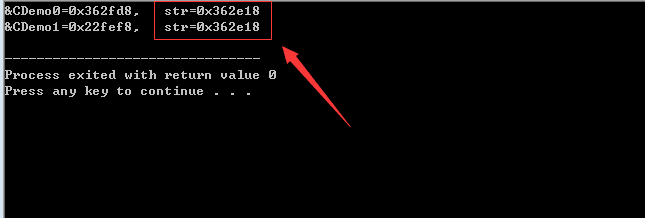
也就是说,发生了CDemo 类的两次析构,两次析构str 所指向的同一内存地址空间(两次str 值相同=0x362e18)。
本问题归根结底就是浅拷贝与深拷贝的问题。如果CDemo 类添加一个这样的复制拷贝构造函数就可以解决问题:
		CDemo(const CDemo &cd)
		{
			this->str=new char[strlen(cd.str)+1];
			strcpy(str,cd.str);
		}
改正之后的程序如下:
#include<iostream>
#include<cstdlib>
#include<vector>
#include<cstring>
using namespace std;

class CDemo{
	public:
		CDemo():str(NULL){};

		CDemo(const CDemo &cd)
		{
			this->str=new char[strlen(cd.str)+1];
			strcpy(str,cd.str);
		}

		~CDemo()
		{
			if(str)
			{
				static int i=0;
				cout<<"&CDemo"<<i++<<"="<<(int *)this<<",   str="<<(int *)str<<endl;
				delete[] str;
			}
		}
		char *str;
};

int main(int argc,char** argv)
{
	CDemo d1;
	d1.str=new char[32];
	strcpy(d1.str,"trend micro");
	vector<CDemo>*a1=new vector<CDemo>();
	a1->push_back(d1);
	delete a1;
	return EXIT_SUCCESS;
}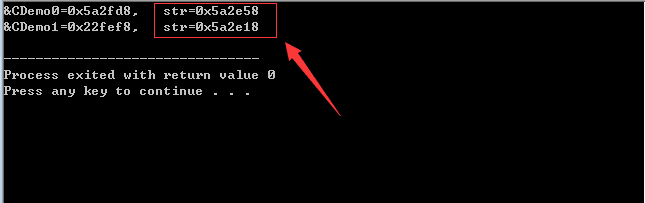
添加深复制拷贝构造函数就可以解决问题了。
最后
以上就是简单大侠最近收集整理的关于C++浅拷贝与深拷贝(程序员面试宝典试题)的全部内容,更多相关C++浅拷贝与深拷贝(程序员面试宝典试题)内容请搜索靠谱客的其他文章。
本图文内容来源于网友提供,作为学习参考使用,或来自网络收集整理,版权属于原作者所有。








发表评论 取消回复