在小数之间加减乘除的时候,由于二进制不能精确表示小数,从而导致精度丢失。在实际开发中,这种情况是很糟糕的。为了解决这一情况,我们可以利用BgiDecimal。但是这中间还有些问题需要注意的。
1、加减乘
首先,我们来看一个实例
BigDecimal num1 = new BigDecimal(3.0);
BigDecimal num2 = new BigDecimal(2.1);
System.out.println(num1.add(num2));
打印结果

并不是我们期望的结果,从jdk参考手册,我们可以找到原因
- The results of this constructor can be somewhat unpredictable. One might assume that writing
new BigDecimal(0.1)in Java creates aBigDecimalwhich is exactly equal to 0.1 (an unscaled value of 1, with a scale of 1), but it is actually equal to 0.1000000000000000055511151231257827021181583404541015625. This is because 0.1 cannot be represented exactly as adouble(or, for that matter, as a binary fraction of any finite length). Thus, the value that is being passedin to the constructor is not exactly equal to 0.1, appearances notwithstanding. - The
Stringconstructor, on the other hand, is perfectly predictable: writingnew BigDecimal("0.1")creates aBigDecimalwhich is exactly equal to 0.1, as one would expect. Therefore, it is generally recommended that theString constructor be used in preference to this one. - When a
doublemust be used as a source for aBigDecimal, note that this constructor provides an exact conversion; it does not give the same result as converting thedoubleto aStringusing theDouble.toString(double)method and then using theBigDecimal(String)constructor. To get that result, use thestaticvalueOf(double)method.
我们再来看另外一个例子
BigDecimal num1 = BigDecimal.valueOf(3.0);
BigDecimal num2 = BigDecimal.valueOf(2.1);
System.out.println(num1.add(num2));
打印输出
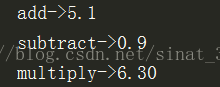
这次是我们期望的结果。
所以,我创建BigDecimal对象的时候,最好通过静态方法valueOf(double)
当然,我们也可以通过另外一种方式。先将double值转为字符串,再通过Bigdecimal的构造函数创建对象
BigDecimal num1 = new BigDecimal(Double.toString(3.0));//或者3.0 + ""
BigDecimal num2 = new BigDecimal(Double.toString(2.1));//或者2.1 + ""
System.out.println("add->"+num1.add(num2));
System.out.println("subtract->"+num1.subtract(num2));
System.out.println("multiply->"+num1.multiply(num2));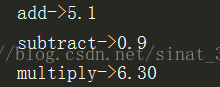
2.除
jdk提供了几种小数之间相除的方法。
BigDecimal num1 = new BigDecimal(3.0);
BigDecimal num2 = new BigDecimal(2.1);
System.out.println("divide->"+num1.divide(num2));
直接运行,奇怪的发现出现异常了

从异常信息可以知道,相除的结果不能够用二进制精确表示,所以需要使用另外一个方法
BigDecimal num1 = new BigDecimal(3.0);
BigDecimal num2 = new BigDecimal(2.1);
System.out.println("divide->"+
num1.divide(num2,3,RoundingMode.FLOOR));

第二个参数表示,当结果是无限小数时,保留几位有效数字
第三个参数表示,如何保留有效数字,例如四舍五入、向下取等
<script>
var _hmt = _hmt || [];
(function() {
var hm = document.createElement("script");
hm.src = "https://hm.baidu.com/hm.js?5e96c091ce7bc89fd43194bbc14eaadc";
var s = document.getElementsByTagName("script")[0];
s.parentNode.insertBefore(hm, s);
})();
</script>
最后
以上就是威武羊最近收集整理的关于java之BigDecimal的加减乘除的全部内容,更多相关java之BigDecimal内容请搜索靠谱客的其他文章。
本图文内容来源于网友提供,作为学习参考使用,或来自网络收集整理,版权属于原作者所有。








发表评论 取消回复