2019独角兽企业重金招聘Python工程师标准>>> 
该书中有一个好玩的打印
case 1:
#include <iostream>


int main()
{
        char ch;

        std::cout << "Type, and I shall repeat.n";
        std::cin.get(ch);


        while (ch != '.')
        {
                if (ch == 'n')
                        std::cout << ch;
                else
                        std::cout << ++ch;

                std::cin.get(ch);
        }

        std::cout << "nPlease excuse the slight confusionn";

        return 0;
}
执行结果:
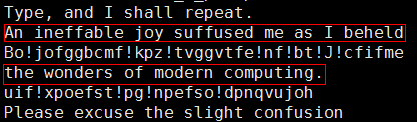
因为++ch,所以打印的是输入的下一个字符。
case 2:
使用ch+1代替++ch
#include <iostream>


int main()
{
        char ch;

        std::cout << "Type, and I shall repeat.n";
        std::cin.get(ch);


        while (ch != '.')
        {
                if (ch == 'n')
                        std::cout << ch;
                else
                        std::cout << ch + 1;

                std::cin.get(ch);
        }

        std::cout << "nPlease excuse the slight confusionn";

        return 0;
}
执行结果:
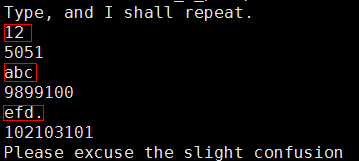
发现输入的是字符,输出的是字符对应的ascii码,原因是加法操作使char型提升为int。
case 3:
打印ch
#include <iostream>


int main()
{
        char ch;

        std::cout << "Type, and I shall repeat.n";
        std::cin.get(ch);


        while (ch != '.')
        {
                if (ch == 'n')
                        std::cout << ch;
                else
                        std::cout << ch;

                std::cin.get(ch);
        }

        std::cout << "nPlease excuse the slight confusionn";

        return 0;
}
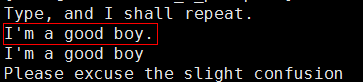
结果:
转载于:https://my.oschina.net/u/2326611/blog/1491177
最后
以上就是勤奋蓝天最近收集整理的关于ifelse 测试-C++ Primer Plus该书中有一个好玩的打印的全部内容,更多相关ifelse内容请搜索靠谱客的其他文章。
本图文内容来源于网友提供,作为学习参考使用,或来自网络收集整理,版权属于原作者所有。








发表评论 取消回复